



USB Response Pad
Technical specifications
We have taken the decision to publish full technical and timing specifications as all too often the equipment you use on a daily basis is of unknown quality. In our view, if other vendors do not publish specifications for their hardware or software you should not be using it!
Physical specifications
- Carbon fibre effect plastic enclosure (202 mm length x 137 mm width x 35 mm high)
- 4x Japanese Seimitsu PS 14 GN 30 mm dia buttons, overall dia 34.5 mm (certified for min 1,000,000 presses)
- 4x Active Switch Closures (9-
way D) to short out external push- to- make buttons on external equipment - 1x 2.5 mm stereo socket for +5V TTL event marker on any button down
- 4x 3.5 mm mono sockets for external push-
to- make button input - Full-
Speed USB 2.0 (USB 3.0 compatible) - 4x unique +5V TTL event markers for use with The Black Box Toolkit v2 (9-
way D) - Appears to the host PC/Mac/Linux system as a standard HID keyboard (no drivers required)
- Anti-
ghosting technology means that up to 6 buttons can be held down and released in any order whilst being correctly reported to the host operating system - - meets full USB HID keyboard specifications - Fully updatable firmware -
32 K flash RAM (100,000 Erase/Write Cycles)
*Nominal accuracy
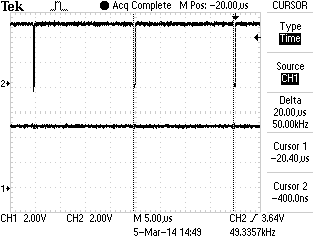
- In USB response pad mode checks for a button press 50,000 times a second (50 kHz sampling rate)
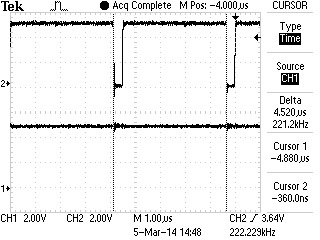
- In Black Box response pad mode checks for a button press 221,000 times a second (221 kHz sampling rate)
- Typical time to recognise a button press 10 millionths of a second (10.20 µs)
- Typical time to transmit keystroke(s) to PC after detecting a button down 60-
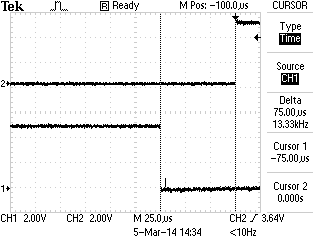
87 millionths of a second (60- 87 µs) - - status of up to 6 buttons/keys from 8, transmitted on first available USB packet - Typical time to recognize a button up 75 millionths of a second (75 µs)
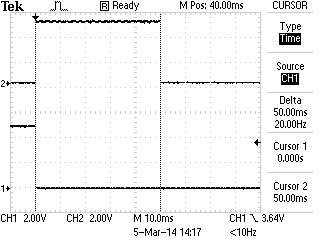
- 2.5mm socket +5V TTL pulse width 50 ms (interrupt driven timer)
- 4x ASC's 0.4 ms inherent delay due to use of Solid State Relays (SSR) to protect your equipment
- 4x BBTK +5V TTL signal matches button down onset, duration and offset
- 25 ms button up debounce (a button has to be cleanly up for 25 ms before a key up signal is sent to the PC)#
#This can add 25 ms to key down durations -
In order to validate our claims for accuracy we have tested the shipping electronics and firmware thoroughly. Below are a series of screen grabs from one of our Tektronix oscilloscopes.



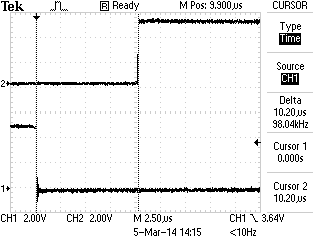
Physical button down (1) to TTL event marker (2)
USB mode sampling rate, i.e. how many times a second button status is checked (2)
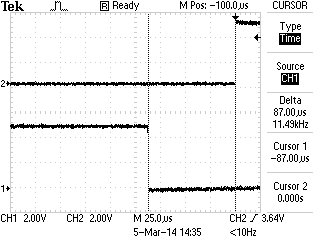
Physical button down (1) to USB keystroke sent on fist available USB packet to PC (2) -
BBTK mode sampling rate, i.e. how many times a second button status is checked (2)
Physical button up (1) to TTL event marker (2) marker (2)
TTL pulse width (2)
click on the images to enlarge